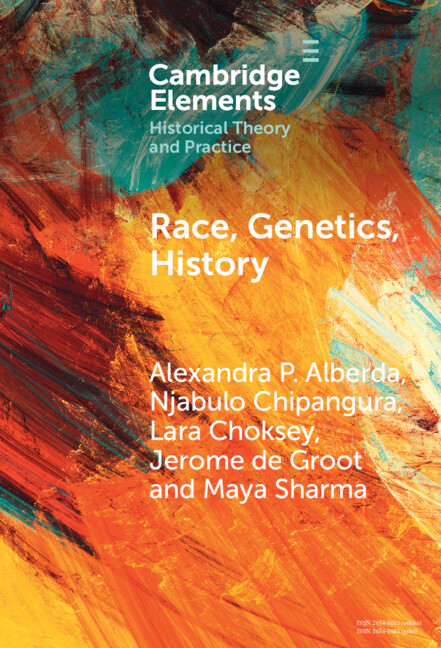
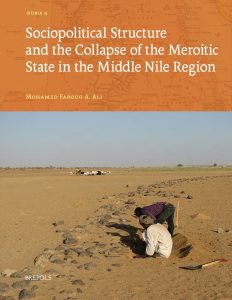
Mohamed Faroug A. Ali, Visiting Associate Professor of Archaeology at The Africa Institute, Global Studies University, has published his first book, Sociopolitical Structure and the Collapse of the Meroitic State in the Middle Nile Region, with international academic publisher Brepols.
The book offers a new interpretation of the development and collapse of the Meroitic state, one of northeast Africa’s most significant ancient civilizations. Drawing on archaeological fieldwork, textual sources, and landscape analysis, Ali shifts attention from rulers and major urban centers to rural communities, frontier regions, and economic networks.
His research examines how communities along the state’s western frontier and eastern hinterland retained cultural autonomy and maintained limited engagement with central institutions. Ali argues that this fragmentation weakened the state’s ability to respond collectively to economic change and external pressures, contributing to its eventual collapse.
This book seeks to reconsider the history of the Meroitic state by looking beyond royal and urban centers to the rural communities and regional networks that shaped its development. My fellowship at The Africa Institute provided valuable time and intellectual space to advance the manuscript and bring this research to publication,” Ali said.
The book builds on research Ali advanced as the Okwui Enwezor Postdoctoral Fellow in Visual Culture, Performance Studies, and Critical Humanities at The Africa Institute from 2022 to 2024. The publication demonstrates how sustained research support can help scholars develop significant new work and bring it to wider academic audiences.
It also reflects The Africa Institute and GSU’s commitment to supporting research that reconsiders established historical narratives, advances scholarship on Africa and the Global South, and develops new approaches to understanding societies across regions and historical periods.
Ali’s research focuses on the formation, political economy, collapse, and regeneration of ancient states in sub-Saharan Africa, as well as ancient iron-working landscapes and intercultural contact.