Menu

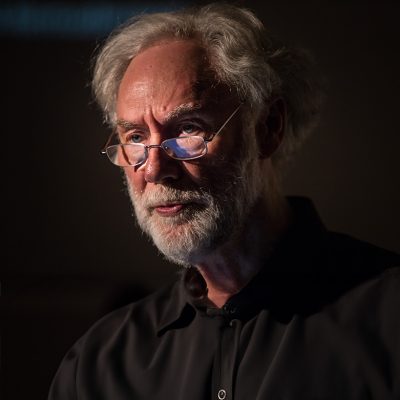
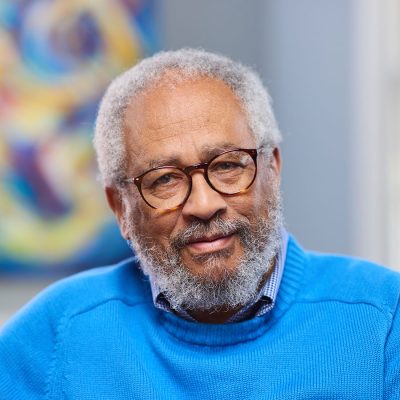
Munther A. Younes

Munther Younes is the Reis Senior Lecturer in Arabic Language and Linguistics and Director of the Arabic program in the Department of Near Eastern Studies at Cornell University. Concurrently, he also holds the role of Academic Director of Akadimiyyat Arabiyyat al-Naas in Jordan. 

In addition to directing the Arabic program, he teaches different levels of specialized Arabic courses in Arabic linguistics and the language of the Quran. Before joining the Cornell faculty in 1990, he taught Arabic at the Defense Language Institute in Monterey, California, and prior to that, he taught English and linguistics in Jordan and Saudi Arabia. 

Younes has published a number of articles in Arabic linguistics, teaching Arabic as a foreign language, and the language of the Qur’an. He has developed an Arabic program at Cornell that is radically different from Arabic programs elsewhere in its integration of spoken Arabic with Modern Standard Arabic, reflecting the language’s use by native speakers. 

He earned a B.A. in English and a diploma in education from the University of Jordan (1974), and a Ph.D. in linguistics from the University of Texas at Austin (1982).

Research

Younes’s research interests include Arabic linguistics (phonetics, phonology, morphology, sociolinguistics, and comparative/historical dialectology), teaching Arabic as a foreign language, the language of the Qur’an and comparative Semitic linguistics.

Publications

  • Younes, Munther. Kalila wa Dimna: for students of Arabic. Routledge, 2020.
  • Younes, Munther. Charging Steeds or Maidens Performing Good Deeds: In Search of the Original Qur’an. Routledge, 2019.
  • Younes, Munther, and Elizabeth Huntley. “From an MSA-only to a fully integrated Arabic foreign language curriculum.” In The Routledge handbook of Arabic sociolinguistics, pp. 288-299. Routledge, 2019.
  • Younes, Munther. “Blessing, Clinging, Familiarity, Custom–or Ship? A New Reading of the Word Īlāf in Q 106.” Journal of Semitic Studies 62, no. 1 (2017): 181-189.
  • Younes, Munther A., R. Kirk Belnap, Jonathan Featherstone, Elizabeth Huntley, Manuela EB Giolfo, Federico Salvaggio, Emma Trentman et al. Arabic as one language: Integrating dialect in the Arabic language curriculum. Georgetown University Press, 2017.
  • Younes, Munther A., R. Kirk Belnap, Jonathan Featherstone, Elizabeth Huntley, Manuela EB Giolfo, Federico Salvaggio, Emma Trentman et al. Arabic as one language: Integrating dialect in the Arabic language curriculum. Georgetown University Press, 2017.
  • Younes, Munther. The integrated approach to Arabic instruction. Routledge, 2014.
  • Younes, Munther. The Routledge Introduction to Qur’anic Arabic. Routledge, 2012.
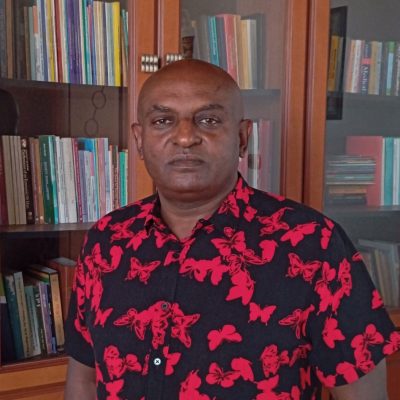
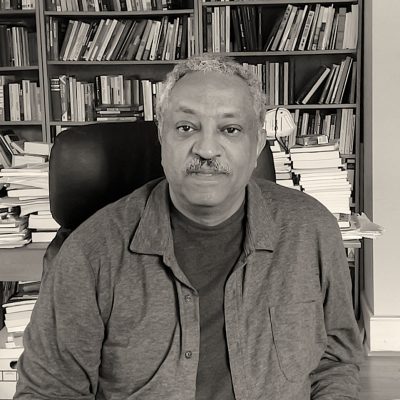
Moges Yigezu Woube

Moges Yigezu Woube is an Associate Professor of Linguistics at the Department of Linguistics and Philology, Addis Ababa University. After earning his Ph.D. in Comparative-Historical Linguistics from the University of Brussels in 2001, over the past two decades, Woube has actively participated in various research programs, gaining a unique blend of experiences intersecting language, culture, education, and policy formulation. 

He has served as the principal investigator of the project titled Beyond Access: Improving the Quality of Early Reading Instructions in Ethiopia and South Sudan, funded by NORAD from 2016 to 2023, where he conducted research on mother tongue education in multilingual settings involving minority languages, teacher training practices in multilingual education, and indigenous educational systems. He has also been involved in the preparation of Amharic textbook for foreign students and co-authored a bilingual Amharic-English school dictionary. Additionally, Woube has contributed as a co-editor to the book Early Childhood Language Education and Literacy Practices in Ethiopia, part of the Routledge Research in Language Education series, released in August 2023. Presently, he is co-editing another significant book project, The Cambridge Handbook on Research Methods for Language in Society, in collaboration with Dave Sayers of the University of Jyväskylä in Finland and Sonal Kulkarni-Joshi, a professor at Deccan College in India.

In academic management, Woube served in various capacities ranging from Department Chair to the position of Director of Graduate Studies at Addis Ababa University, Ethiopia. As the Director of the Graduate Studies, he provided leadership in managing the graduate school and facilitating and overseeing the significant expansion of graduate programs across faculties. Moreover, he served as the training leader and coordinator of Ph.D. Program in Peace, Federalism, and Human Rights from October 2010 to May 2011 at the Institute of Peace and Security Studies of Addis Ababa University, funded by the University of Peace in Costa Rica, a UN-mandated University. On a regional level, Woube worked as the Focal Person for the Research School for Social Sciences and Humanities in Eastern and Southern Africa (RESSESA) from 2011 to 2013 and as a member of the Advisory Technical Committee responsible for managing the program across Eastern African universities. Established by eight countries in East Africa and funded by OSSREA (Organization for Social Science Research in Eastern and Southern Africa), RESSESA aimed to enhance research capacity in the region. In this capacity, Woube was pivotal in planning and coordinating Research Methodology courses for Ph.D. students across the region.

Research

Woube’s research primarily spans two broad disciplinary areas: socio-cultural linguistics and educational linguistics, including literacies. In socio-cultural linguistics, his work delves into language policy and planning, linguistic landscapes, language education policies concerning mother tongue education and early childhood education. Within the realm of educational linguistics, Woube’s interests extend to early reading instructions and related areas. 

Selected Publications

  • Kassahun Weldemariam, Margareth Sandvik and Moges Yigezu (eds.). 2023. Early Childhood Language Education and Literacy Practices in Ethiopia. Abingdon: Routledge, 2023.
  • “Induction of beginning teachers in Ethiopian schools with reference to multilingual pre-school programs.” In Early Childhood Language Education and Literacy Practices in Ethiopia, pp 27-34. Edited by Kassahun Weldemariam, Margareth Sandvik and Yigezu, Moges,  27-34. Abingdon: Routledge, 2023.
  • “Reading instructions in the traditional schools of the Ethiopian Orthodox Tewahido Church (EOTC).” In Early Childhood Language Education and Literacy Practices in Ethiopia, edited by Kassahun Weldemariam, Margareth Sandvik, and Moges Yigezu, 89-108. Abingdon: Routledge, 2023.
  • Moges Yigezu & Binyam Mendisu. “Teacher training, development and mentorship practices in the ETOC schools”. In Early Childhood Language Education and Literacy Practices in Ethiopia, edited by Kassahun Weldemariam, Margareth Sandvik and Moges Yigezu, 109-125. Abingdon: Routledge, 2023.
  • Evans, Owino George, and Yigezu, Moges. “The role of fathers and care-giving arrangements in informal settlements in Kenya and Ethiopia.” Frontiers in Public Health 11 (2023): 1-10.
  • Meyer, Ronny, and Moges Yigezu. “Linguistic diversity in Ethiopian languages.” (2023).
  • Ogud, Okello Ojhu & Yigezu, Moges . Metaphorical Conceptualization of Love in Anywaa. Zena-Lissan, Vol 32, no. 1, pp. 81-113, Academy of Ethiopian Languages and Cultures, Addis Ababa University, 2023.
  • Digitalization in teaching and education in Ethiopia. Digitalization, the future of work and the teaching profession project. Publication of International Labor Organization, 1-24, Geneva, 2021.
  • Abebayehu M. M. and Yigezu, Moges. Dichotic Listening Abilities among Liturgical Teachers of the Orthodox Church, Laterality: Asymmetries of Body, Brain and Cognition, vol. 25, issues 1-3, 1-22, 2020. Manuscript ID: LAT-OP 21-1659.R2.
  • Yigezu, Moges, and Robert Blackwood. “Harari linguistic identity in the LL: Creation, legitimization and omission in the city of Harar, Ethiopia.” Negotiating and contesting identities in linguistic landscapes (2016): 131-143.
  • Language Ideologies and Challenges of Multilingual Education in Ethiopia: the case of Harari Region, OSSREA: Printed@ Eclipse, Addis Ababa, Ethiopia, 2010.

Terence Smith

Terence (Terry) Smith is an eminent historian of modern art, a leading critic of contemporary art, a prominent analyst of curatorial practice, and a pioneering critical theorist of contemporaneity. His books Making the Modern: Industry, Art and Design in America (1993), What is Contemporary Art? ( 2009), Thinking Contemporary Curating (2012), and Antinomies of Art and Culture: Modernity, Postmodernity, Contemporaneity, edited with Okwui Enwezor and Nancy Condee (2008) are widely regarded as landmarks in each of these fields. The Architecture of Aftermath (2006), Art to Come: Histories of Contemporary Art (2019) and Iconomy: Towards a Political Economy of Images (2022) have established him as a leading interpreter of contemporary visual cultures.

A Fellow of the Australian Academy of the Humanities since 1996, he is Emeritus Professor of Art History at the University of Sydney and Andrew W. Mellon Emeritus Professor of Contemporary Art History and Theory in the Department of the History of Art and Architecture at the University of Pittsburgh. As well, he is also a Professor in the Division of Philosophy, Art, and Critical Thought at the European Graduate School; Professor at Large, The Africa Institute, Global Studies University, Sharjah; and Faculty at Large in the Curatorial Program at the School of Visual Arts, New York. In 2010, he was named the Australia Council Visual Arts Laureate and won the Mather Award for art criticism conferred by the College Art Association (USA). In 2022, the CAA conferred on him its Distinguished Teacher of Art History Award.

His books other than those mentioned above include Transformations in Australian Art (Craftsman House, Sydney, 2002); Contemporary Art: World Currents (Laurence King and Pearson/Prentice-Hall, 2011); Talking Contemporary Curating (Independent Curators International, 2015); The Contemporary Composition (Sternberg Press, 2016); One and Five Ideas: On Conceptual Art and Conceptualism (Duke University Press, 2017); Curating the Complex & The Open Strike (Sternberg and MIT Press, 2021); and, with Fred R. Myers, Six Paintings from Papunya: A Conversation (Duke University Press, 2024).

A founding board member of the Museum of Contemporary Art Australia, he served on the board of the Andy Warhol Museum in Pittsburgh. He is currently a Board Member Emeritus of the Carnegie Museum of Art in Pittsburgh and a member of the Advisory Board of the Biennial Foundation in New York.

Among his recent projects is the edited two-volume series Okwui Enwezor: Selected WritingsVolume 1: Toward a New African Art Discourse and Volume 2: Curating the Postcolonial Condition — published in August 2025 by Duke University Press for The Africa Institute, with support from the Sharjah Art Foundation.

Fouad Makki

Fouad Makki currently serves as the Director of the Polson Institute for Global Development (2019–present) and holds the position of Associate Professor in the Department of Global Development at Cornell University. Additionally, he is a founding board member of Cornell’s Institute for Comparative Modernities.

His academic focus encompasses teaching and writing on topics such as international development, social theory, political economy, and the historical sociology of modernity. Trained in the comparative study of society and history at Cornell and Binghamton universities, he actively engages with interdisciplinary approaches within the social sciences.

Operating within a broad comparative framework, Makki’s research delves into materials from the history and contemporary politics of social change, particularly in Ethiopia and Eritrea, where he has conducted extensive research over many years. His contributions to academia have been recognized with the CALS Young Faculty Teaching Excellence Award in 2010 from Cornell University’s College of Agriculture and Life Sciences.

Makki’s academic journey includes a Bachelor of Arts Independent Major in Comparative Studies in Society and History from Cornell University and a Ph.D. in Sociology from Binghamton University.

Research

Fouad’s research seeks to advance knowledge of the sociology and ecology of development. His research explore questions of empire and nationalism, the postwar development initiative, and the historical sociology of modernity. 

Publications

  • Makki, Fouad. “Post-colonial Africa and the world economy: The long waves of uneven development.” Journal of World-Systems Research (2015): 124-146.
  • Makki, Fouad. “Reframing development theory: the significance of the idea of uneven and combined development.” Theory and Society 44 (2015): 471-497.
  • Geisler, Charles, and Fouad Makki. “People, power, and land: New enclosures on a global scale.” Rural sociology 79, no. 1 (2014): 28-33.
  • Makki, Fouad. “Power and property: commercialization, enclosures, and the transformation of agrarian relations in Ethiopia.” Journal of Peasant Studies 39, no. 1 (2012): 81-104.
  • Makki, Fouad, and Charles Geisler. “Development by dispossession: Land grabbing as new enclosures in contemporary Ethiopia.” In International Conference on Global Land Grabbing, vol. 68. Future Agricultures Sussex, UK, 2011.
  • Makki, Fouad. “Subaltern agency and nationalist commitment: the dialectic of social and national emancipation in colonial Eritrea.” Africa Today 58, no. 1 (2011): 29-52.

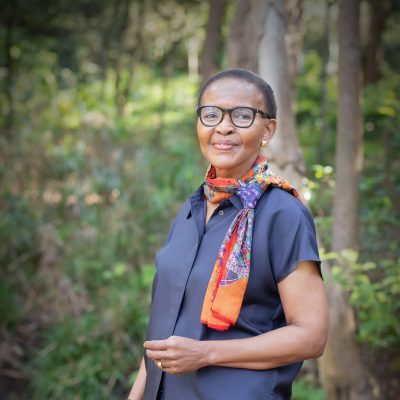
Pumla Gobodo-Madikizela

Pumla Gobodo-Madikizela is the South African National Research Foundation’s Research Chair in Violent Histories and Transgenerational Trauma and the Director of the Centre for the Study of the Afterlife of Violence and the Reparative Quest (AVReQ) at Stellenbosch University. She has won several academic awards, which include the Templeton Prize, Harry Oppenheimer Fellowship Award, the most prestigious academic award in Africa; the Harvard Radcliffe Institute Fellowship; a Fellowship at the Kennedy School’s Carr Centre for Human Rights Policy, Harvard University; an honorary Doctor of Theology from the Friedrich-Schiller University, Jena, Germany; and an honorary Doctor of Laws degree from Rhodes University. Recognized with the Alan Paton Prize in South Africa and the Christopher Award in the United States, her acclaimed book A Human Being Died that Night will be reprinted as a Mariner Classic. She has also contributed to Narrating our Healing: Perspectives on Healing Trauma as co-author, and edited Memory, Narrative and Forgiveness: Perspectives on the Unfinished Journeys of the Past and Breaking Intergenerational Cycles of Repetition: A Global Dialogue on Historical Trauma and Memory. Additionally, she curated History, Trauma and Shame: Engaging the Past Through Second Generation Dialogue (Routledge, 2020), a collection of essays on Jewish-German dialogue.

Research

Pumla Gobodo-Madikizela’s research interest is in historical trauma and its intergenerational repercussions and exploring what the “repair” of these transgenerational effects might mean.

Selected Publications

  • Gobodo-Madikizela, Pumla. “The Afterlife of Apartheid: A Triadic Temporality of Trauma.” Social Dynamics, 49(1) (2023): 67–86. doi:10.1080/02533952.2023.2180215.
  • Gobodo-Madikizela, Pumla. “Remorse as an ethical encounter and the impossibility of repair.” In Remorse and Criminal Justice, pp. 243-266. Routledge, 2021.
  • Wale, Kim, Pumla Gobodo-Madikizela, and Jeffrey Prager, eds. Post-conflict hauntings: Transforming memories of historical trauma. Springer Nature, 2020.
  • Gobodo-Madikizela, Pumla. “Forgiveness is ‘the wrong word’: Empathic Repair and the Potential for Human Connection in the Aftermath of Historical Trauma.” In Alternative approaches in conflict resolution (2018): 111-123.
  • Gobodo-Madikizela, P. (2017). Intersubjectivity and embodiment: Exploring the role of the maternal in the language of forgiveness and reconciliation. In Moral Psychology of Forgiveness, pp. 1-15. London: Rowman & Littlefield
  • Gobodo-Madikizela, Pumla. What does it mean to be human in the aftermath of historical trauma? Re-envisioning The Sunflower and why Hannah Arendt was wrong. Nordic Africa Institute, 2016.
  • Gobodo-Madikizela, Pumla. Breaking intergenerational cycles of repetition: A global dialogue on historical trauma and memory. Cologne and Leverkusen, Germany, Budrich Academic Press, 2016.
  • Gobodo-Madikizela, Pumla. “Psychoanalysis and reconciliation.” The Routledge handbook of psychoanalysis in the social sciences and humanities. Routledge, 2016. 416-434.
  • Gobodo-Madikizela, Pumla. “Psychological repair: The intersubjective dialogue of remorse and forgiveness in the aftermath of gross human rights violations.” Journal of the American Psychoanalytic Association 63, no. 6 (2015): 1085-1123.

Matthew S. Hopper

Matthew S. Hopper serves as a Professor of History at California Polytechnic State University, San Luis Obispo, where he specializes in African and Indian Ocean history. His book, “Slaves of One Master: Globalization and Slavery in Arabia in the Age of Empire” (Yale University Press, 2015), examines the history of the African diaspora in Arabia and the Gulf and was recognized as a finalist for the Frederick Douglass Book Prize in 2016.

Hopper has held postdoctoral and visiting fellowships at the Gilder Lehrman Center at Yale University, the Institute for Advanced Study in Princeton, the University of Cambridge, King’s College London, and The Africa Institute (Global Studies University) in Sharjah. His research has received support from organizations such as the Social Science Research Council, Fulbright-Hays, the National Endowment for the Humanities, and the British Academy. His scholarly contributions have been published in journals such as Annales, Itinerario, and the Journal of African Development.  He is currently a member of a team working to incorporate the Indian Ocean into the Transatlantic Slave Trade Database (SlaveVoyages.org) with the support of a grant from the National Endowment for the Humanities.

Hopper earned his Ph.D. in History from UCLA and holds dual master’s degrees: one in African Studies from UCLA and another in History from Temple University. 

Research Interests

Hopper’s research interests include world history and the history of East Africa, eastern Arabia and the Gulf in the 19th and 20th centuries. His research focuses on the history of the African diaspora in the Indian Ocean and the comparative history of slavery and abolition. 

Selected Publications

  • Slaves of One Master: Globalization and Slavery in Arabia in the Age of Empire (New Haven, CT: Yale University Press, 2015). ISBN 9780300192018
  • “Liberated Africans in the Indian Ocean World,” in Richard Anderson and Henry Lovejoy (eds.), Liberated Africans and the Abolition of the Slave Trade, 1807-1896 (Rochester, NY: University of Rochester Press, 2020), 271-294.  ISBN 9781580469692 
  • With Katrina HB Keefer, “Following the Trail of the Slave Trade: Branding, Skin, and Commodification,” in Katherine Dauge-Roth and Craig Koslofsky (eds.), Stigma: Marking Skin in the Early Modern World (University Park, PA: Penn State University Press, 2023), 58-81.  ISBN 9780271094434
  • “Enslaved Africans and the Globalization of Arabian Gulf Pearling,” in Pedro Machado, Joseph Christensen, and Steve Mullins (eds.), Pearls, People, and Power: Pearling and the Indian Ocean World (Athens, OH: Ohio University Press, 2019).  ISBN 9780821424025 
  • “Was Nineteenth-Century Eastern Arabia a Slave Society?” in Catherine M. Cameron and Noel Lenski (eds.), What is a Slave Society? The Practice of Slavery in Global Perspective (New York: Cambridge University Press, 2018), 313-336.  ISBN 9781107144897 
  • “Africans and the Gulf: Between Diaspora and Cosmopolitanism,” in Allen Fromherz (ed.), The Gulf in World History (Edinburgh: Edinburgh University Press, 2018), 139-159.  ISBN 9781474430661
  • “The African Presence in Eastern Arabia,” in Lawrence Potter (ed.), The Gulf in Modern Times: People, Ports, and History (New York: Palgrave-Macmillan, 2014), 327-350.  ISBN 9781349503803
  • “Parler en son nom? Comprendre les témoignages d’esclaves africains originaires de l’océan Indien (1850-1930)” [“Speaking for Themselves? Understanding African Freed Slave Testimonies from the Western Indian Ocean,1850-1930”], co-authored with Edward A. Alpers.  Annales: Histoire, Sciences Sociales 63, no. 3 (juillet-août 2008): 799-828.
  • “Imperialism and the Dilemma of Slavery in Eastern Arabia and the Gulf, 1873-1939,” Itinerario: International Journal on the History of European Expansion and Global Interaction 30, no. 3 (2006): 76-94.

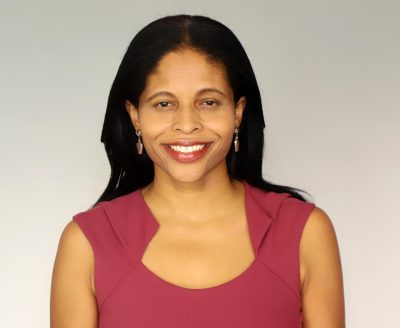
Margo Natalie Crawford

Margo Natalie Crawford is the Edmund J. and Louise W. Kahn Professor of English at the University of Pennsylvania and chairs the department. She also served as the Director of the Center for Africana Studies at the University of Pennsylvania from 2019 to 2022. She has also held positions at Cornell University, University of Massachusetts Amherst, Indiana University-Bloomington, and Vassar College.

Crawford is a member of the editorial board of the Society for Textual Scholarship, The James Baldwin Review, and the Wiley Blackwell Anthology of African American Literature. She is the author of “What is African American Literature?” (Wiley Blackwell, 2021), and “Black Post-Blackness: The Black Arts Movement and Twenty-First-Century Aesthetics” (University of Illinois Press, 2017), which was the 2019 Winner of the James A. Porter Book Award at the Porter Colloquium on African American Art and Art of the African Diaspora. She is also the co-editor of “New Thoughts on the Black Arts Movement” (Rutgers University Press, 2006) and “Global Black Consciousness” (Duke University Press, 2018).

Her essays appear in a wide range of books and journals, including American Literary History, South Atlantic Quarterly, Modern Drama, American Literature, The Psychic Hold of Slavery, The Trouble with Post-Blackness, The Modernist Party, Publishing Blackness: Textual Constructions of Race Since 1850, The Cambridge Companion to American Poetry Post-1945, Want to Start a Revolution?: Radical Women in Black Freedom Struggle, Callaloo, Black Renaissance Noire and Black Camera.

She has an MA and Ph.D. in American Studies from Yale University (1993 and 2000 respectively).

Research

Crawford is a scholar of 20th and 21st-century African American literature and visual culture and global black studies. Crossing boundaries between literature, visual art, and cultural movements, her scholarship opens up new ways of understanding black radical imaginations. Her other research interests include performance studies, comparative ethnic studies, radical feminism, and transnational modernism.

Selected Publications

  • The Flesh of the Matter: A Critical Forum on Hortense Spillers (Vanderbilt University Press, October 2024), ed. Margo Crawford and C. Riley Snorton
  • “When Hortense Spillers and Toni Morrison Meet in the Clearing: The Hieroglyphics of Marking and Unmarking,” Boundary 2 (Vol. 51, no. 1, February 2024, Duke University Press), 77-95.
  • “African American Citizenship in the Post-Civil Rights Era,” in The Cambridge companion to contemporary African American literature, ed. Yogita Goyal. Cambridge University Press, 2023.
  • “The Black Experimental Impulse: Returning to Seismosis,” in John Keene’s Literary Experiments, Post45, 2023.
  • “What Time Is It When You’re Black?” South Atlantic Quarterly Special Issue, “Black Temporality in Times of Crisis,”, ed. Habiba Ibrahim and Badia Ahad. 121:1 January 2022: 153-172.
  • “The Black Fire Remix,” Introduction, Black Fire This Time, ed. Kim McMillon (Aquarius/Willow Books, 2022)
  • “The Atmos-Feeling of Resurrection: Feeling Black (Not Slave) in Black Arts Movement Drama,” “Slavery’s Reinventions,” Modern Drama (Vol. 62, Issue 4, Winter 2019), 483-501.
  • Dilution Anxiety and the Black Phallus, Ohio State University Press, 2008.
  • New Thoughts on the Black Arts Movement, coeditor Lisa Gail Collins, Rutgers University Press, 2006

Barrymore Anthony Bogues

Barrymore Anthony Bogues, Ph.D. (1994, Political Theory, University of the West Indies, Mona), is a writer, scholar, curator, and the Director of the Ruth J Simmons  Center for the Study of Slavery and Justice. He held  the position of Professor of Africana Studies, Royce Professor of Teaching Excellence (2004-2007), and is currently the Asa Messer Professor of Humanities and Africana Studies at Brown University. Additionally, he is an affiliated faculty member in the departments  of Political Science , History of Art and Architecture, and the Center for Latin American and Caribbean Studies.

Bogues is the co-editor of a special issue of the Italian journal Filosofia Politica (2017) on Black political thought and the co-convener with the National  African American Museum of History and Culture of the Global Curatorial Project and   of the international exhibition project  , In Slavery’s Wake .” He is also the co-editor of the volume on African and African Diasporic Art, “The Imagined New” (2023), and a special edition of the Caribbean journal on the Caribbean Intellectual Tradition, “BIM” (2023).

Having curated and co-curated shows in the United States, South Africa, and the Caribbean, Bogues has published numerous essays and articles on the history of criticism, critical theory, political thought, political philosophy, intellectual and cultural history, as well as Haitian Art. He is a member of the editorial collective for the journal “boundary 2” and was an honorary professor at the Center for African Studies at the University of Cape Town, South Africa (2006-2017), and is currently a  Distinguished Visiting Professor and Curator at the University of Johannesburg.

Furthermore, Bogues holds the position of Visiting Professor of African and African Diaspora Thought at the Free University of Amsterdam and is a member of the scientific committee of Le Centre d’Art in Haiti. His teaching portfolio includes courses on African political philosophy, cultural politics, intellectual history, contemporary critical theory, and comparative literature of Africa and the African Diaspora, as well as courses on the art history of the  Caribbean.

Research

Bogues’s primary research and writing interests span intellectual, literary, and cultural history, radical political thought, political theory, critical theory, as well as Caribbean and African politics, Haitian, Caribbean, and African Art. 

 Selected Publications

  • The Critical Thought of Sylvia Wynter : An Intellectual Biography ( forthcoming )  2025.
  • Blowing the Abeng : Essays on Caribbean Thought , History , Art and Politics  2024.
  • “The Dual Haitian Revolution and the Making of Haiti.” Essay in Road to Democracy In South Africa Vol 10: Africans and the Anti Colonial Struggle in the African Continent, the Caribbean and the Americas. 2022.
  • “Debt, Sovereign Power and Haitian Revolution” Essay  in Road to Democracy In South Africa Vol 10: Africans and the Anti Colonial Struggle in the African Continent, the Caribbean and the Americas. 2022.
  • “Working Through Injustice: Historical Catastrophe, Living History and Righting Wrongs.” Perspectives on History, October 2022.
  • Judy, Ronald. “Anthony Bogues: Thinking in Motion.” Boundary 2, Spring 2022, pp. 3-83.
  • “Reflections on Writing, Politics, and Caribbean Society: Conversations with Nuruddin Farah & George Lamming.” Boundary 2, Spring 2022, pp. 85-128.
  • “Afterword Essay” in The Point is to Change the World: Selected Writings of Andaiye, edited by Alisa Trotz , , London: Pluto Press, 2020, pp. 254-260.
  • “Anti-Colonialism and the Politics of Equality in the Political Thought of Michael Manley” in Michael Manley in Conversations, IRP, 2019, pp. 220-240.
  • The Art of Haiti, Loas, History, and Memory.  Colorado Springs Fine Art Museum. 2019.
This site is registered on wpml.org as a development site. Switch to a production site key to remove this banner.