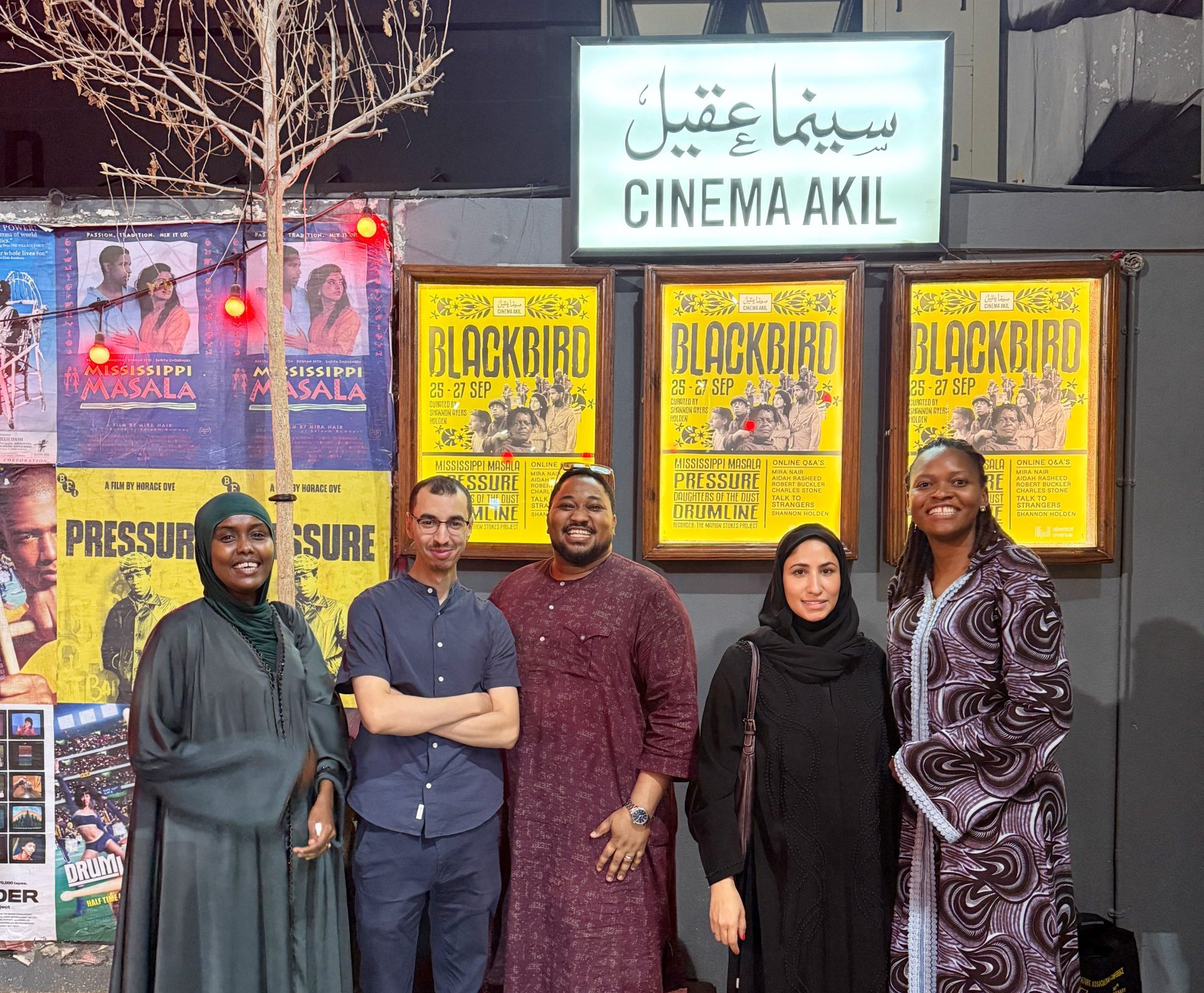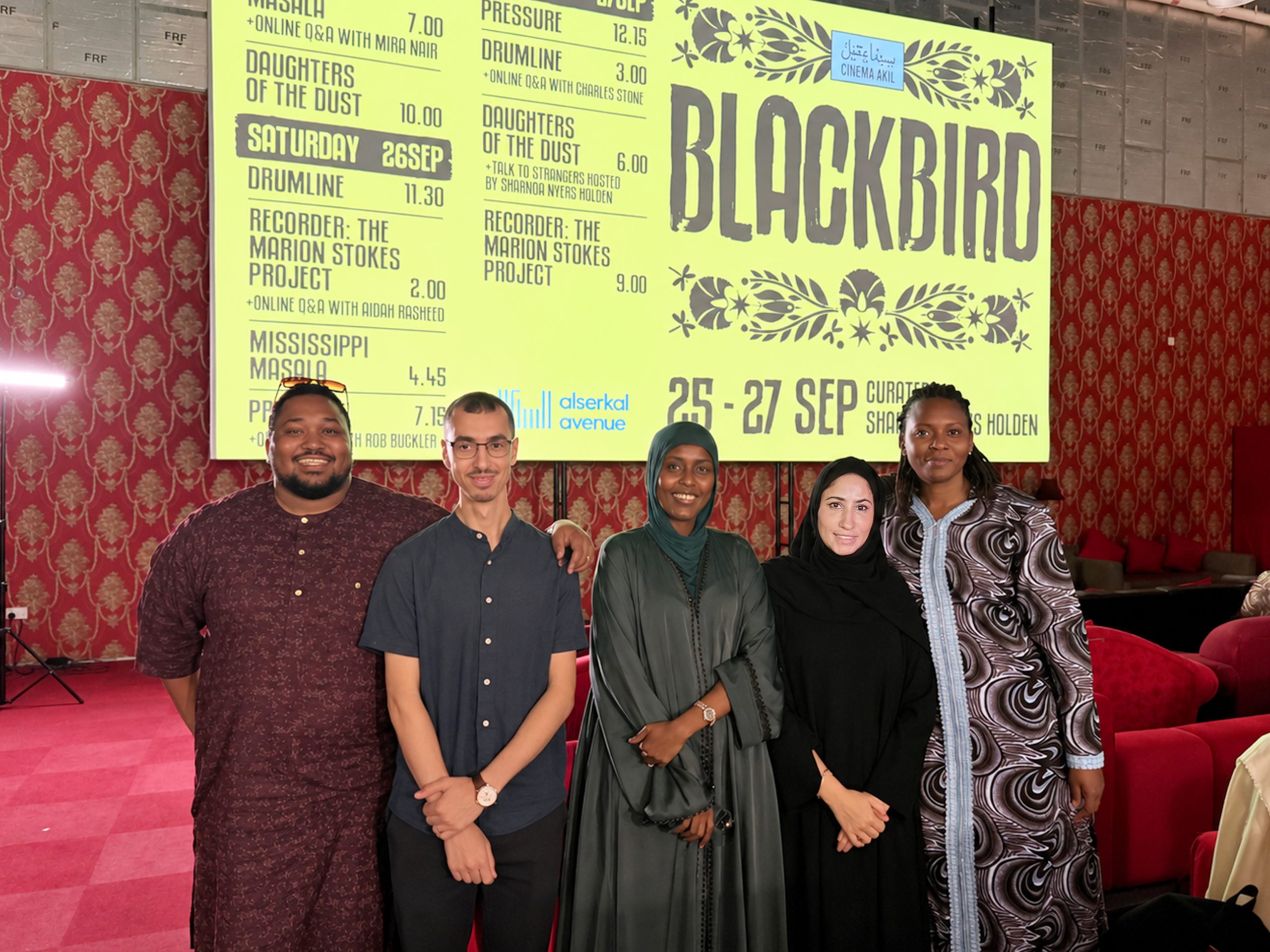
Second-year Ph.D. in Global Studies students in Special Topics in Global Studies: African Cinema continued their learning beyond the classroom at BLACKBIRD, a film program at Cinema Akil in Dubai. The course is taught by Elizabeth Olayiwola, Okwui Enwezor Postdoctoral Fellow at The Africa Institute, Global Studies University, and Senior Lecturer in the Department of Broadcast, Film, and Multimedia at the University of Abuja, Nigeria. Olayiwola joined the class to watch Mira Nair’s Mississippi Masala and Julie Dash’s Daughters of the Dust over the weekend beginning September 25, 2026.
Now in its second edition, BLACKBIRD brings films and community conversations together around Black memory, voice, and legacy. For the students, watching the films alongside classmates and other audience members opened new ways to consider displacement, identity, and belonging.
Ahmed Laala Loaar reflected on how seeing a film in a cinema differs from watching it alone. Mississippi Masala introduced him to the expulsion of South Asian communities from Uganda and the questions of belonging that followed. Revisiting Daughters of the Dust, he interpreted its surrounding water as a space through which memory and connections to a past before enslavement could be recovered.
For Nasra Dahir Mohamed, a conversation after Mississippi Masala extended the film’s questions into the experiences of people around her. She spoke with four audience members who had grown up in the UAE after being born elsewhere. Their different relationships with their birth countries and the UAE led her to wonder whether home is where a person comes from, where they feel accepted, or a place they continue to imagine from a distance. She carried that question into Daughters of the Dust.
Mustafa Ahmed focused on the distinction between citizenship and attachment in Mississippi Masala. Reflecting on Jay, who remains emotionally connected to Uganda after his expulsion, Mustafa observed that “legal citizenship may provide rights and mobility, but it cannot necessarily replace one’s sense of home.”
Alya Rashid Burhaima connected the screenings with the curator’s introduction and her own memories of listening to Nina Simone with her sister. Conversations with other audience members prompted her to consider how home might be a person, a memory, a longing, or a wound. “Learning does not happen only through images on a screen,” she reflected. “It also happens through music, personal memories, the reactions of an audience, conversations with strangers and the silence that remains after the cinema lights return.”
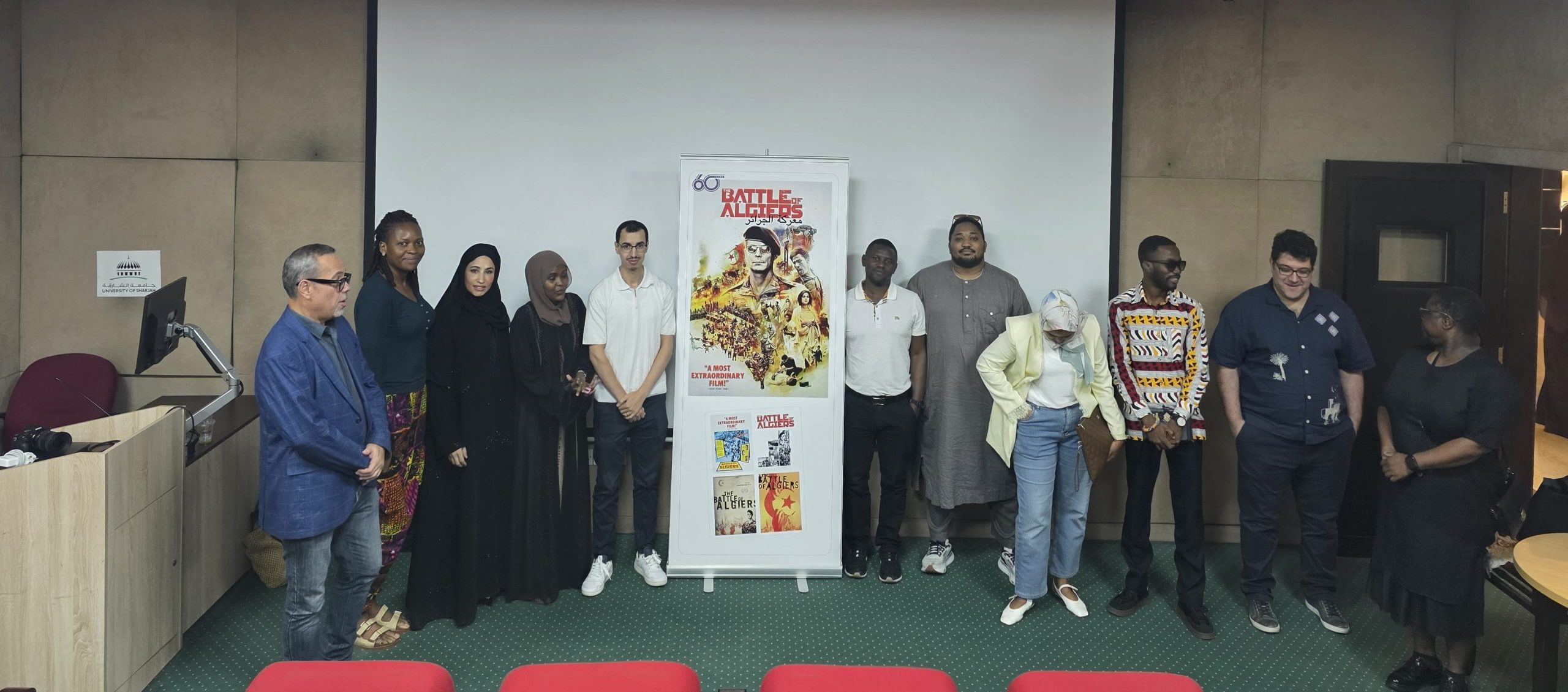
The visit built on an earlier experience in the course. During its second week, the class traveled to the Faculty of Communication at the University of Sharjah for a symposium and screening marking the 60th anniversary of The Battle of Algiers (1966). The symposium gave students an opportunity to hear scholarly perspectives on anticolonial cinema before watching a film they had planned to study in class.
For Olayiwola, the conversations are part of what makes studying film together valuable. “The films give us the starting point; the experience gives us the space to think, question, disagree, connect,” she said. From the screenings to the journey back to Sharjah, the class’s discussions continued long after the cinema lights came on.