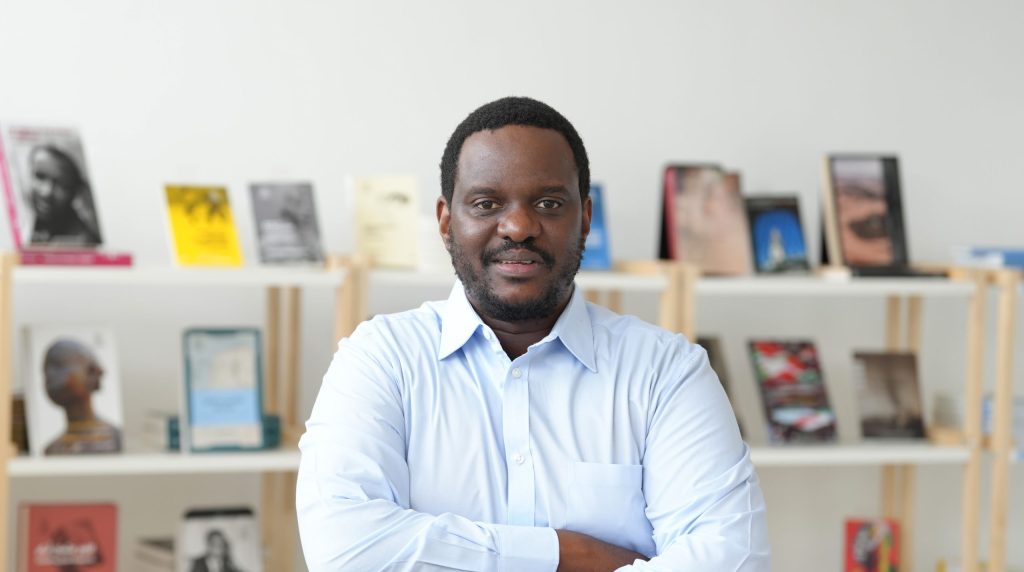
Grieve Chelwa, Chair of the Department of Social Sciences and Associate Professor of Political Economy, convened a high-level side event on green industrialization at the 2026 IMF and World Bank Annual Meetings in Bangkok on October 15, 2026. The event was held at the Victor Club at the FYI Center, near the Annual Meetings venue.
The event launched a new report, From Price-Taker to Producer: A Regional Industrial Strategy for Solar PV in Africa, co-authored by Chelwa and Dr. Vinayak Bhardwaj. The report calls for urgent industrial policies across the African continent to position Africa as a producer, and not only a buyer, in the global solar value chain. Africa is among the fastest-growing solar markets in the world, yet it makes almost none of the panels it uses. The report sets out a regional strategy, grounded in cheaper finance, conditional public support and cooperation between countries, to capture more of the value of this boom.
The program began with a keynote address from Dr. Stephen Karingi, Director of the Macroeconomics and Governance Division at the UN Economic Commission for Africa (UNECA), followed by a presentation of the report’s findings by Chelwa and Dr. Bhardwaj. A high-level panel discussion then followed, moderated by Martine Dennis, Founder and Host of Africa Here and Now (formerly of the BBC and Al Jazeera), and featuring Hannah Ryder, CEO of Development Reimagined; Rethabile Melamu, CEO of the South African Photovoltaic Industry Association; Deprose Muchena, Director of the Open Society Foundations’ Resources Futures in Africa Programme; Crystal Simeoni, Executive Director of the Nawi Afrifem Collective; and Anusha Lall, Regional Program Coordinator at Focus on the Global South. The panel covered development finance, African manufacturing, continental trade, China–Africa relations, feminist political economy and the Asian experience with industrialization.
Speaking after the event, Chelwa said: “Africa is already one of the fastest-growing solar markets in the world. The question is whether it remains a buyer of other people’s panels or becomes a producer. That choice will be made in the next few years, and it needs to be made deliberately, through solid discussions and solid debates, informed by the research in the report launched in Bangkok.”
The Annual Meetings of the IMF and World Bank take place every year around October, bringing together thousands of participants from across the world, including central bank governors, ministers of finance, civil society, social movements, policy architects, and academics.
The event reflects ongoing faculty engagement in global policy conversations on development, finance, and industrial futures.