The Africa Institute, Global Studies University (GSU), in collaboration with the Open Society Foundations, invites you to the final session of the Restitution and Reparation: Africa and the Post-Colonial Condition Fellowship.
Launched in September 2025, the fellowship program has brought together scholars and practitioners to advance research, critical dialogue, and public engagement on the restitution and repatriation of African cultural heritage. Through its residential fellowships, lecture series, and scholarly exchange, the program has created a space for diverse perspectives and approaches to questions of restitution and reparation.
As we bring this fellowship to a close, The Africa Institute extends its sincere appreciation to the Open Society Foundations for its support and partnership. We also thank all the fellows who joined this program and contributed through their research and perspectives.
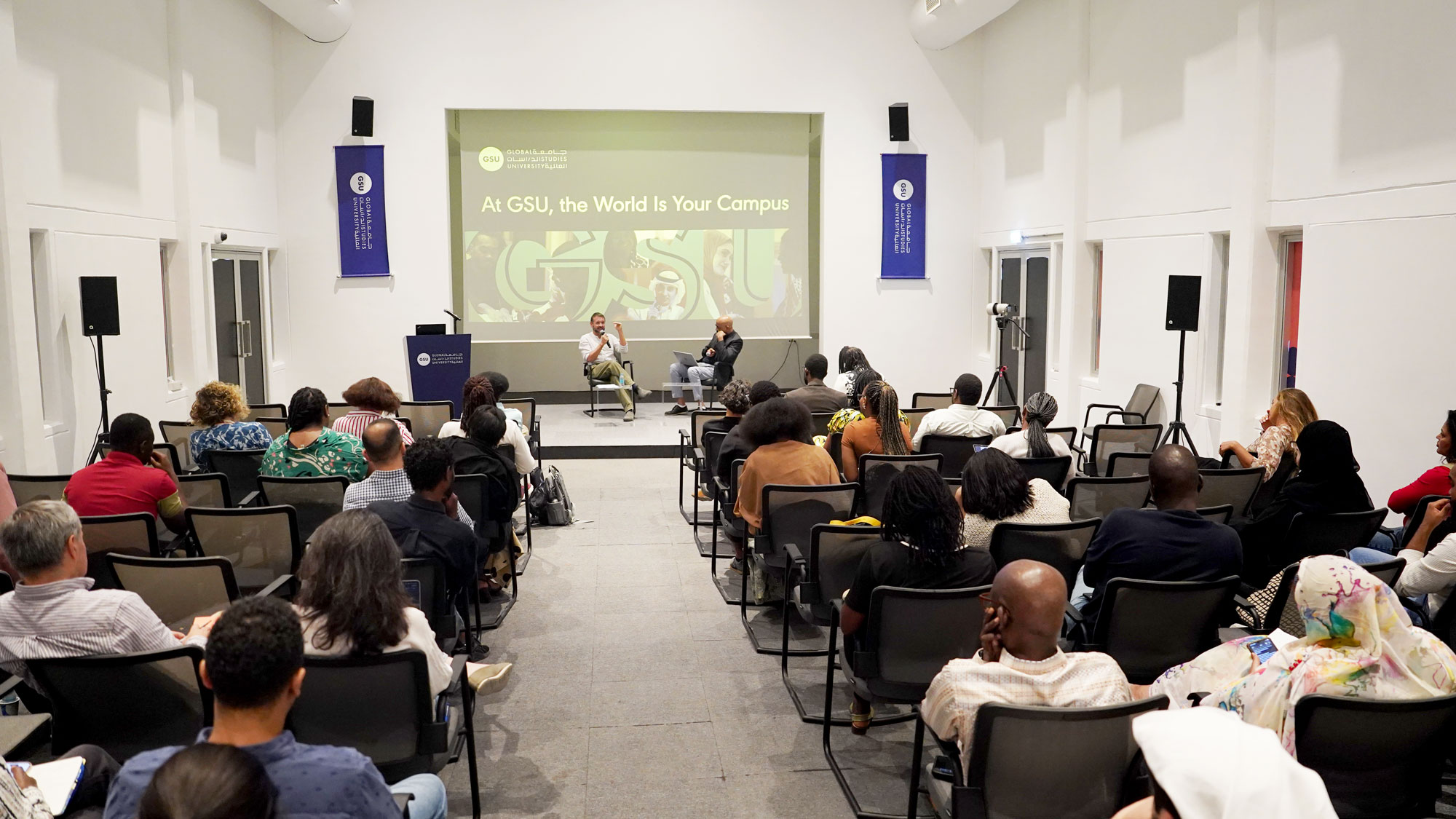
This concluding session brings together the Fall 2026 fellows, Professor Nancy Rushohora, Senior Lecturer, Department of Archaeology and Heritage Studies, University of Dar es Salaam, Tanzania, and Professor Emilio Distretti, Researcher, Writer and Educator, Royal College of Art’s School of Architecture, and will be moderated by Professor Mohammed Faroug, Visiting Associate Professor of Archaeology, The Africa Institute, Global Studies University.
The session will be held on Thursday, 26 November 2026, from 12:30 to 2:30 pm GST at the Global Studies University Auditorium.
Lecture 1
Reclaiming Knowledge of the Majimaji War through a Documentary Film
Nancy Rushohora
Abstract
Struggles for restitution of cultural belongings and human bodies held in museums and other knowledge institutions in the West have often been articulated through scholarly texts. In this talk, Professor Nancy seeks to challenge the colonial epistemic power structures that have disrupted, appropriated, and silenced alternative ways of knowing through audiovisual materials. Drawing on materials generated during her Restitution and Reparation Fellowship at Global Studies University (GSU), alongside a documentary research project in Tanzania, she aims to expand existing restitution debates beyond the recovery of materialities (cultural and human) towards the broader and more urgent imperative of epistemic reparations. The Majimaji War (1904–1908), an anti-colonial resistance against German colonial rule in Tanzania, serves as a case study. Deeply rooted in spiritual and metaphysical systems, the war embodied forms of knowledge that stood in direct contrast to Western epistemologies.
A documentary film is used as a research method, a means of epistemological restitution, and a form of community knowledge activism that can assist in reclaiming knowledge systems marginalized or erased through colonial plundering and looting.
Speaker
Nancy Rushohora
A Tanzanian archaeologist and heritage scholar and a Senior Lecturer in the Department of Archaeology and Heritage Studies at the University of Dar es Salaam. She is also an Honorary Research Fellow at the University of Exeter, UK, and Stellenbosch University, South Africa. Her research focuses on the archaeology of resistance, heritage and trauma, collective memory, and the politics of photography and memorialization, particularly in relation to colonial violence and its aftermath in Africa. (Read More)
Lecture 2
Architecture of Repair
Abstract
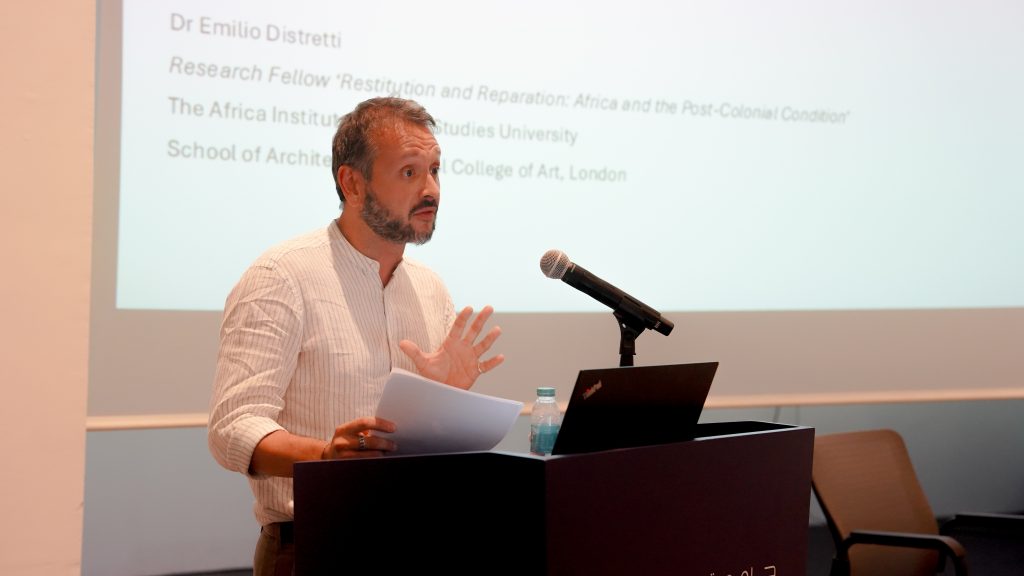
This talk introduces Entity of Decolonization: The Afterlives of Colonial–Fascist Architecture (Park Books, forthcoming April 2027), a book project emerging from a long-standing collaboration with the art collective DAAR (Decolonizing Architecture Art Research). Moving between southern Italy, Palestine, and Africa while tracing the colonial and architectural connections across Sicily, Libya, Eritrea, and Ethiopia, it brings together decolonial pedagogy, the critical preservation of difficult heritage, public art, and the politics of repair and reparation, approaching heritage as a contested field in which histories of violence and resistance remain sedimented in space. Beyond what these architectures once were, the central question is what they can become—and under what conditions their transformation can avoid reproducing the violence embedded within them. Through collective gathering, learning, reuse, and inhabitation, the project explores repair and profanation as practices that suspend inherited functions and return what has been separated to common use. In this process, architecture becomes a site of anti-colonial and anti-fascist political practice, challenging the inherited separations between past and present, object and use, private and public, architecture and life.
Speaker
Emilio Distretti
A London-based researcher, writer, and educator at the Royal College of Art’s School of Architecture. His work brings together writing, teaching, and collaborative practice to examine the afterlives of colonial architecture, spatial and material heritage through critical preservation, spatial justice, and transnational struggles for reparation (Read More)
Moderator
Mohamed Faroug A. Ali
The co-founder and CEO of the American Sudanese Archaeological Research Center (AmSARC) and Executive Director of the Sudanese Archaeologists Union. He also serves as Assistant Professor of Archaeology at the International University of Africa, Sudan, and is currently a Visiting Associate Professor of Archaeology at The Africa Institute, Global Studies University. (Read More)